
Airport complaints put collection practices under scrutiny
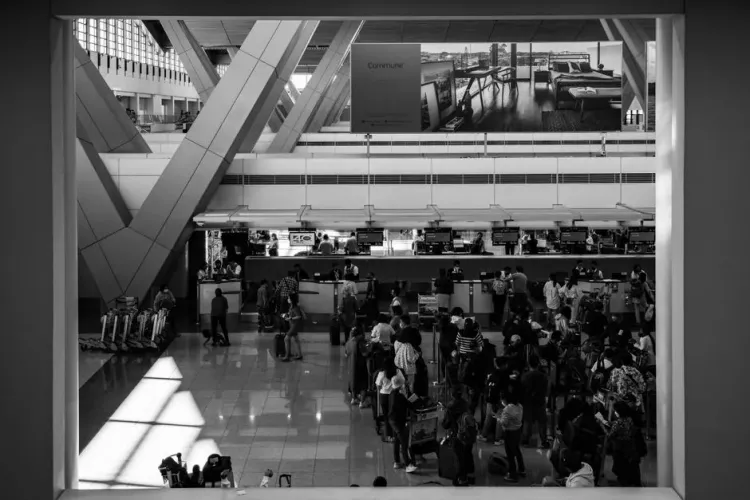
The official Visitax rate is 285 pesos per foreign visitor, approximately C$22. But PorEsto reported on October 28, 2026, that payment modules in Cancun airport's Terminal 2 had documented charges as high as 550 pesos per person, or 265 pesos above that rate. Foreign tourists told the outlet they had not known about the fee, and airport operator ASUR had not issued a response to the complaints.
According to The Cancun Sun, travelers alleged that some kiosks added processing or convenience fees, or used unfavorable exchange rates. Several problematic kiosks have reportedly been closed.
Quintana Roo's Tourism Secretariat, known as Sedetur, and its Finance and Planning Secretariat, Sefiplan, are reviewing collection procedures. Tourism Secretary Bernardo Cueto Riestra said officials were addressing criticism posted online, though his department had received no formal complaints through administrative channels. Authorities are also examining collections at Tulum International Airport to prevent similar problems.
Lezama has called for transparent, orderly collection that does not harm visitors' experience, while indicating that the tax itself will remain.
Who pays Visitax
Created in 2021 and administered by Quintana Roo's tax administration service, Visitax applies to foreign visitors to destinations such as Cancun, Riviera Maya and Tulum. Mexican citizens and local residents are exempt, according to Diario CAMBIO 22 and the state government.
Diario CAMBIO 22 reported on October 23, 2026, that the charge began at 224 pesos and was later raised by 25% to 285 pesos. The state government said in December 2025 that the 285-peso rate would remain unchanged throughout 2026.
Visitax is a state charge, not Mexico's federal non-resident fee, which is generally collected through international airline tickets. The law also exempts foreign visitors who enter Quintana Roo through its southern border and cruise passengers who have already paid the state's separate cruise-passenger charge.
A repeal request and questions about spending
Ernesto Sánchez Rodríguez, a federal deputy from the opposition National Action Party (PAN), argues that Visitax places an "unfair burden" on travelers while tourism businesses face challenges. He has also warned about fraudulent websites taking payments from tourists.
Caribe Peninsular reported on October 25, 2026, that Sánchez planned to introduce a formal request in Mexico's Chamber of Deputies asking Quintana Roo to eliminate Visitax. He also wants the state Congress to establish a special commission to examine how much the tax brings in and how the money is spent.
Article 51-Octies of Quintana Roo's Law of Rights establishes Visitax but does not specifically assign its proceeds to tourism promotion, beach upkeep, sargassum management or other designated programs. The reporting cited by Travel Market Report also found no separate Visitax revenue total in the state's published 2026 income law. The state's cruise-passenger charge, by contrast, has provisions directing money to disaster and health emergencies, infrastructure, tourism development and public safety.
Separately, the Quintana Roo government outlined a spending plan in a December 5, 2025, statement. It said Visitax receipts would go into a public trust with three funds: 10% for tourism promotion and crisis control; 40% for sargassum control, beach cleaning and restoration, and ecosystem conservation; and 50% for strategic projects related to tourism.
Budget figures reported by Riviera Maya News on August 23, 2026, cover a broader category that includes Visitax, rather than the tax alone. The initial 2026 proposal targeted 4.307 billion pesos in that category, compared with an estimated 1.393 billion pesos for 2025. Rather than increasing the fee, the proposal would have made hotels withholding agents jointly responsible for payment.
After opposition from the hotel sector, the final figure was set at 1.775 billion pesos, 2.532 billion pesos below the original proposal.
A separate federal increase remains pending
Mexico's federal non-resident fee, or DNR, is estimated at just under C$75 in 2026. A proposed increase for 2027 would take it from 983 to 1,158 pesos, according to Diario CAMBIO 22's October 23 report. That would be a 17.8% increase, reduced from an initial proposal of 35.8%.
The measure had advanced through Senate committees but still needed full approval. If approved, and if Visitax remains at 285 pesos, a foreign visitor liable for both charges would pay a combined 1,443 pesos, compared with 1,268 pesos.
The same report cited ASUR data showing that Cancun recorded 20,882,658 passenger movements from January through September 2026, down from 22,196,857 during the same period in 2025. The decline was 1,314,199 movements, or 5.9%. The report cautioned that those figures do not establish Visitax as the cause.
Payment guidance for travelers
The repeal campaign has not changed travelers' obligations: Visitax remains mandatory for those subject to it. Travel advisors should distinguish it from the federal fee generally included in international airfares.
Travelers can pay before departure through the official Visitax government website and save the digital receipt as proof. Using that portal can help them avoid third-party processing fees and potentially fraudulent payment sites.