Schools would receive the largest share
El Diario de Sonora reported on October 31 that the Budget and Public Accounts Committee, led by Morena deputy Merilyn Gómez Pozos, had approved the draft opinion. La Jornada's October 30 account of the proposal detailed how the money would be redistributed and the committee's argument that the INE could absorb the reduction without compromising its electoral duties.
The largest allocation, 3 billion pesos, would go to the Secretariat of Public Education's La Escuela Es Nuestra program. It supports improvements to buildings, infrastructure and services at basic and upper-secondary schools. The proposed 2027 Federal Expenditure Budget, known as the PPEF, assigns the program 20 billion pesos, which the committee says is 25.5 percent below its approved 2026 funding in real terms. The transfer would bring its allocation to 23 billion pesos.
Another 1 billion pesos would go to Branch 16, Environment and Natural Resources, raising its proposed allocation from 49,508.3 million to 50,508.3 million pesos.
The Federal Civil Aviation Agency would receive an additional 700 million pesos. Its allocation in the PPEF is 175.4 million pesos, compared with 685 million pesos approved for 2026; the committee's amendment would bring its 2027 funding to 875.4 million pesos. The committee says the increase would support compliance with the National Air Navigation Plan, whose 15-year strategy seeks to align the agency's operations with International Civil Aviation Organization standards.
The remaining 300 million pesos would go to the National Search Commission for Persons, or CNBP, under the Secretariat of Governance. Although its proposed 2027 funding is up by 8.0 million pesos in nominal terms, the committee calculates a 2.5 percent decline after inflation. The additional money is intended to strengthen local search commissions' technical and operational capabilities and support efforts to search for, locate and identify disappeared and missing people.
How the committee justifies the INE reduction
The INE originally sought 47,010 million pesos for 2027. Its request included a precautionary allocation of 4,736 million pesos for citizen consultations and 10,842 million pesos in public financing for political parties.
The PPEF lists 42,274.5 million pesos for the institute, or 20,437.3 million pesos more than the approved 2026 budget. Within the proposed 2027 allocation, 8,913.5 million pesos would cover political parties' guaranteed entitlements. Another 33,361.0 million pesos would fund the institutional activity Democracy Preserved and Strengthened, which encompasses national elections, citizen participation and development of the party system.
The committee describes its proposed 5 billion peso reduction as approximately 15 percent and says it would leave the INE with 37,275.0 million pesos in 2027. In its assessment, that amount would allow the institute to organize the concurrent 2026-2027 federal electoral process while protecting party entitlements and citizens' political and electoral rights.
To support that assessment, the committee compares the proposed funding with two previous election years. The INE's approved budgets were 26,819 million pesos in 2021 and 32,767.0 million pesos in 2024. Expressed in 2027 prices, those amounts are 34,799.9 million and 36,665.5 million pesos, respectively. The draft says the 2027 allocation before the proposed cut is 21.5 percent above the 2021 level and 15.3 percent above the 2024 level.
The election workload behind the request
The INE outlined four electoral responsibilities in its August 21 budget communication, published by Central Electoral: the federal election to renew the Chamber of Deputies; 32 concurrent local electoral processes, including elections for 17 governorships; the start of the Federal Judicial Electoral Process; and the start of preparations for the 2028 local elections.
Its budget draft also anticipates a larger voting operation. Excélsior reported on August 24 that the institute projected 176,000 polling stations in 2027, up from 170,000 in 2024, and an electoral roll of 102 million people, compared with 98.3 million. The INE expected to oversee elections for 20,109 popularly elected positions and begin preparations for 4,108 judicial positions to be decided in 2028.
INE councilors defended the request before the Chamber of Deputies in August, arguing that elections cost money, according to an Agencia Reforma report carried by El Heraldo de Aguascalientes. Councilor Frida Gómez put the cost of the 2027 election at 13 billion pesos. Councilor Arturo Castillo said the institute had absorbed reductions ranging from 2 to 40 percent of its requests in recent years.
A cut of the proposed size has a precedent: according to Excélsior, the Chamber of Deputies ordered a 5 billion peso reduction to the INE's requested budget in 2024.
The budget debate also comes amid scrutiny of the institute's leadership and staffing. Debate reported on October 31 that the recent resignation of the INE's president and questions about internal hiring had drawn heightened public attention.
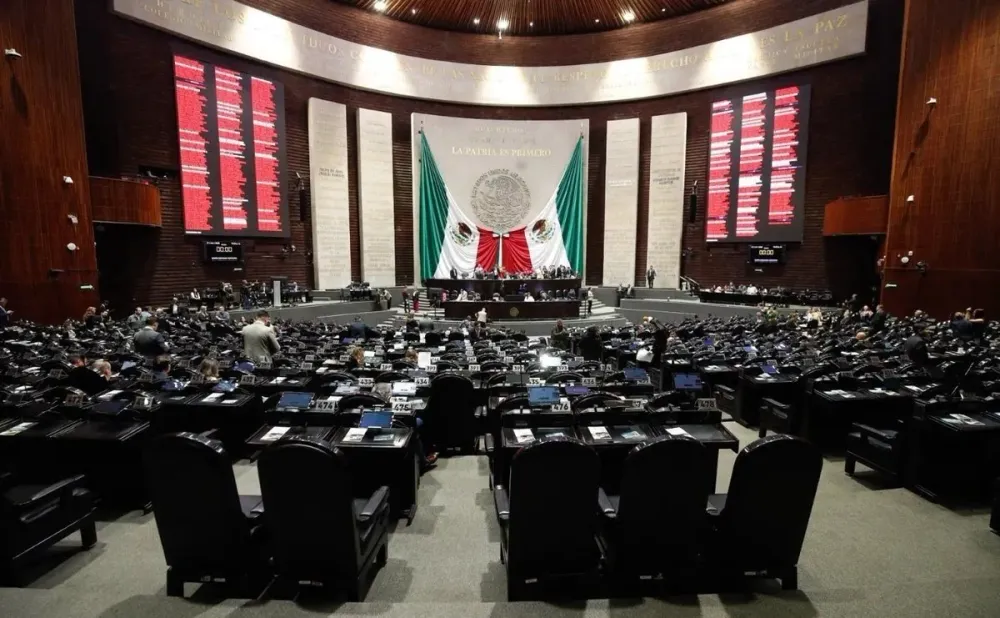
Full Chamber vote expected in November
According to El Diario de Sonora, the full Chamber of Deputies is expected to vote on the opinion on Monday, November 9. Debate is planned for November 9 through 11, with lawmakers seeking to meet the legal requirement to approve the expenditure budget before November 15.