
Salinas proposes electricity tax on data centers
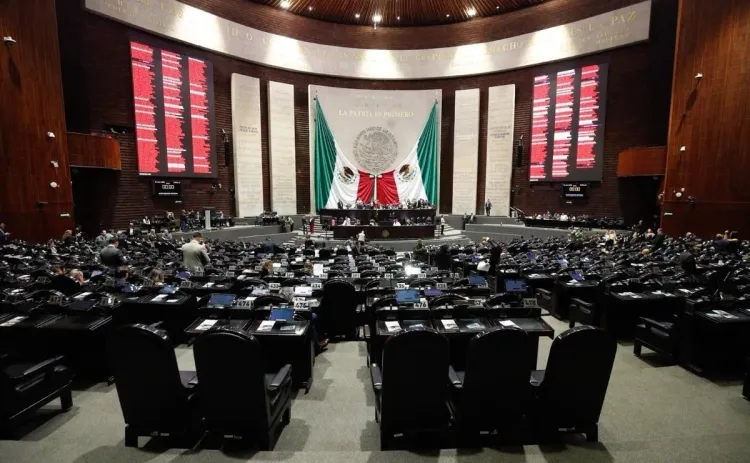
U.S. Rep. Andrea Salinas (OR-06) introduced the Data Center Community Reinvestment Act, which would charge an excise tax of 1 cent per kilowatt-hour consumed by data centers with power capacity exceeding 1 megawatt. Electricity generated on-site would be taxed alongside power drawn from the grid. Salinas' office estimates annual revenue of about $1.76 billion, based on current nationwide data center electricity consumption.
The bill would give equal shares of the proceeds to five federal funds. Two recipients, the Land and Water Conservation Fund and the Housing Trust Fund, would each gain about $352 million annually. That would increase the conservation fund's funding by nearly 40 percent and more than double the housing fund's current funding. The other three recipients would be the Hazardous Substance Superfund, the Highway Trust Fund, and the Energy Technology Trust Fund.
New York sets non-binding neighborhood housing targets
A report featured by Planetizen puts New York City's need at 700,000 additional homes. The shortage is reflected in the city's 2024 housing and vacancy survey: only 1.4 percent of apartments were vacant, the lowest rate in decades. Among apartments priced below $2,400, fewer than 1 percent were vacant, according to City Limits.
The city's draft Fair Housing Growth Strategy assigns a non-binding development target to every neighborhood. City Limits reports that all but four of the 59 community districts would need to speed up housing production to meet citywide needs; the targets are recommendations, not mandates.
The five-year goals vary with neighborhoods' past growth. Areas that have added the least housing are asked to increase housing by about 6.5 percentage points, while the middle tier has an 8.75 percent growth target. The fastest-growing areas are expected to maintain growth of 10 percent over five years. For already-expensive neighborhoods, the plan asks for 25 percent more construction.
ADUs account for 37 percent of new Los Angeles County housing
Los Angeles County completed 10,230 accessory dwelling units, or ADUs, in 2025. Those units made up 37 percent of all new housing in the county, according to Smart Cities Dive. Yet the county's total production declined by more than 4 percent, falling from 28,498 units the previous year to 27,293.
The study highlighted by Planetizen warns that the increase in ADU construction will not be enough to address the area's affordable housing gap. With fewer than 125,400 units produced since 2021, the county remains well short of its state-mandated target of 812,000 new permitted units by 2029.
County public housing lists reopened for a month
Planetizen also highlighted the first reopening of Los Angeles public housing waitlists in more than two years. The Los Angeles County Development Authority accepted registrations for 16 property-specific waiting lists from August 17 through September 16, 2026, according to FOX 11 Los Angeles. Ten lists were for residents age 62 and older, and six were for families. The county's Section 8 waiting list stayed closed.
The authority owns and operates 3,229 public and affordable housing units across 68 properties, serving more than 6,650 residents. Selected applicants pay rent capped at 30 percent of adjusted monthly gross income. An applicant who turns down an offered unit is removed from every other waiting list they selected.
Desalination project would supply Tijuana and Rosarito
Planetizen reported that construction was due to begin soon on one of Latin America's largest desalination plants, intended to reduce dependence on the dwindling Colorado River. In August 2026, Mexico's National Water Commission, CONAGUA, awarded infrastructure group Cox a $304 million contract for Phase I of the Playas de Rosarito plant, according to the California Regional Water Quality Control Board, San Diego.
Total government investment in the first phase is expected to be about $666 million. By August 2029, that phase is expected to provide Tijuana and Rosarito with an additional 190 million liters of potable water per day, or 50 million gallons per day. A second phase would bring the plant's final capacity to 380 million liters per day, but that expansion remains unfunded.