The alleged payments and release order
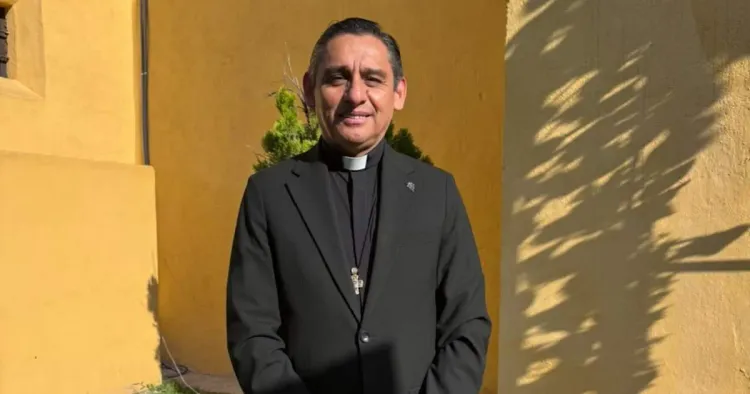
The Justice Department outlined its case Thursday against Benítez Alcántara, 49, a district judge in Mexico City. He faces nine U.S. criminal counts under a second superseding indictment returned September 4. If extradited to face those charges, he could receive a federal prison sentence of up to 15 years on each count.
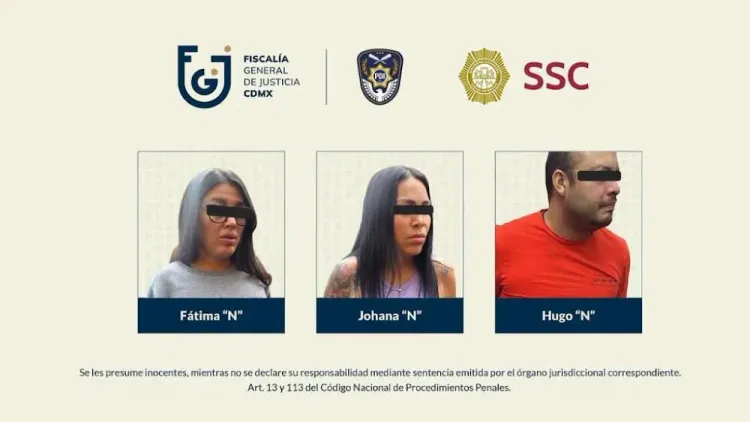
At the center of the allegations is Andrew Clark, a 36-year-old Canadian whom U.S. prosecutors identify as the deputy to alleged cocaine-network leader Ryan Wedding. The Justice Department says Benítez used his judicial authority to help Clark avoid apprehension.
Prosecutors allege that Clark sent approximately $2.75 million in small installments through intermediaries from November 2024 through February 2025 to obtain his release from Mexican custody. On February 24, 2025, Benítez allegedly received the full $2 million bribe. That day, he granted Clark bond and ordered him freed, according to the department.
Clark's release was brief. Authorities arrested him again days later and removed him to the United States, where his criminal case remains pending, the Justice Department said.
The department described an international operation involving the FBI, the Los Angeles Police Department and the Royal Canadian Mounted Police. U.S. Customs and Border Protection in Buffalo, New York, and the Colombian National Police's Directorate of Criminal Investigation and Interpol also provided assistance.
The cocaine network and its alleged leader
Wedding, a former Canadian Olympic snowboarder, is accused of running a cocaine network spanning Colombia, Mexico and the United States. The FBI and Justice Department describe the organization as a billion-dollar criminal enterprise and Canada's largest cocaine supplier. The FBI says it handled about 60 metric tons of cocaine annually and worked with Mexico's Sinaloa Cartel.
On November 19, 2025, officials announced that the State Department had increased its reward for information leading to Wedding's arrest and/or conviction to as much as $15 million, according to the FBI.
Authorities apprehended Wedding in Mexico in January 2026 and subsequently removed him to the United States. He remains in federal custody on drug-trafficking, murder and attempted-murder charges, the Justice Department said. His two separate trials are scheduled for March 31 and October 26, 2027.
Mexico's judicial overhaul adds to uncertainty
The arrest comes as investors assess a broader change in Mexico's courts. In September 2024, lawmakers approved replacing career-based appointments with popular elections for federal judges, including Supreme Court justices. The Law Gazette reported that business confidence and the peso declined when the reform was announced.
The first election, in June 2025, covered half of the country's judicial posts. Participation was roughly 13%, compared with about 60% in the 2024 presidential election. The judges elected in that initial vote began serving in September 2025.
Rating agencies have warned that the overhaul increased uncertainty for investors, according to UPI. Those concerns accompany the review of the trade agreement supporting Mexico's efforts to attract companies moving production closer to their markets.
The issue is not whether elections necessarily produce worse judges than professional appointment systems. It is the uncertainty surrounding a rapid, contested transition with low voter participation and a limited record of performance. A prosecution of one judge does not establish how reliably the restructured courts will operate.
What the case can tell investors
Reliable courts matter to businesses because investments depend in part on enforceable contracts, secure property rights and predictable dispute resolution. The possibility that money can influence a ruling introduces uncertainty into those expectations. Investors may respond by demanding higher returns, increasing financing costs and reducing the value they assign to otherwise unchanged future cash flows.
An arrest can demonstrate enforcement against an individual without proving institutional improvement. This case alone provides no clear basis for changing allocations to Mexican stocks, the peso or companies with Mexican supply chains: it does not establish a change in their expected cash flows or financing costs.
A stronger basis for reassessing judicial risk would be sustained evidence of more professional, consistent rulings and measurable improvements in the handling and enforcement of contract and property disputes. Changes in the risk premiums investors demand and in foreign investment would also matter to that assessment.