Charges and arrest
Hernandez is the seventh person charged in the tunnel investigation, which remains open. His federal grand jury indictment includes charges of providing material support to a foreign terrorist organization, conspiracy to construct or finance a cross-border tunnel, conspiracy to use the tunnel to import controlled substances, and conspiracy to import controlled substances.
Prosecutors say Hernandez designed and built the passage for the benefit of the Cartel de Jalisco Nueva Generacion, or CJNG. The U.S. government designated the cartel a foreign terrorist organization on Feb. 20, 2025.
"Hernandez engineered his own downfall," said U.S. Attorney Adam Gordon. The charges are allegations and have not been proven in court.
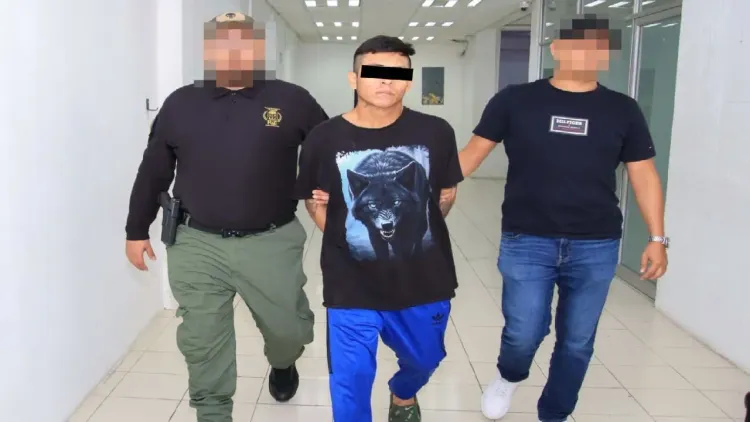
Public reports put Hernandez's arrest on Oct. 15, 2026, in Jalisco, Mexico. According to La Jornada, National Guard and Mexican Army personnel joined the Criminal Investigation Agency of Mexico's Attorney General's Office, known as the FGR, in the operation in Zapopan. Authorities confiscated weapons, drugs and a vehicle before handing Hernandez over to the FGR office in Guadalajara.
Mexican authorities said Hernandez worked under the direct orders of Juan Carlos Valencia González, known as "El 03," La Jornada reported. They identified Valencia González as the current CJNG leader following the killing of Nemesio Oseguera Cervantes, known as "El Mencho," in February 2026.
Surveillance led to a concealed tunnel exit
The Homeland Security Investigations Tunnel Task Force regularly watched the Buy 4 Less warehouse from December 2025 through May 2026, according to Semanario ZETA. The surveillance followed the appearance of a new group of about seven or eight alleged employees at the property in December.
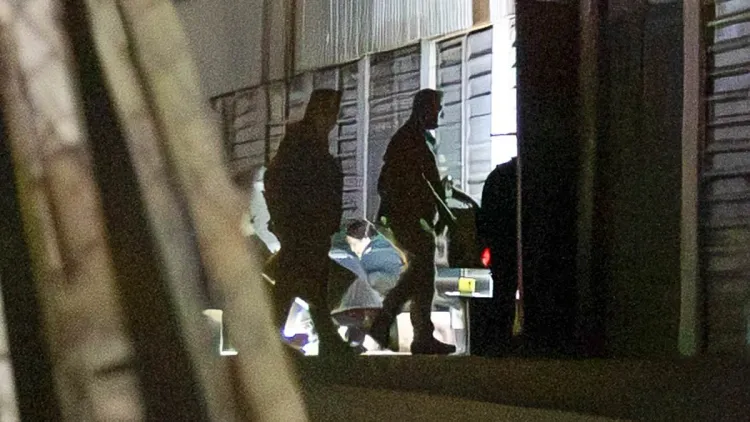
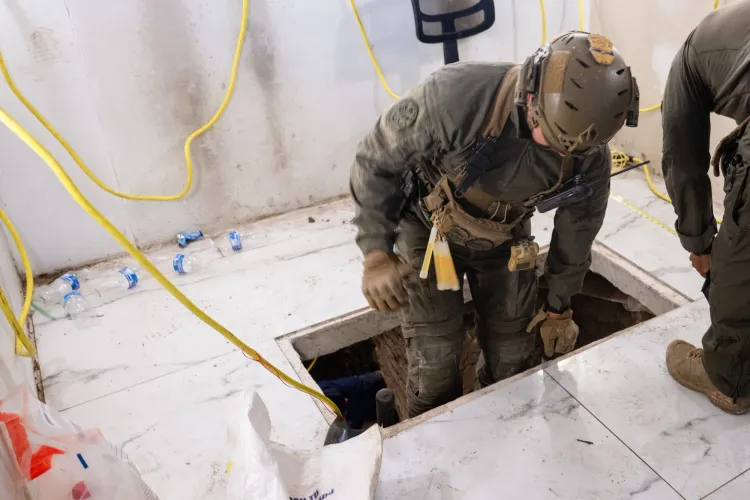
Authorities discovered the tunnel on May 29, 2026, under the Buy 4 Less store at 2498 Roll Drive, Suite E, near San Diego's Otay Mesa Port of Entry. Inside a storage room, agents found an exit concealed beneath the floor and accessible by a hydraulic lift, Semanario ZETA reported.
The Tijuana-to-San Diego passage was approximately 1,933 feet long and reached a depth of 55 feet. Its interior was only 4.5 feet high but had reinforced walls, electric power, ventilation and rails.
Semanario ZETA also reported estimates for the route on each side of the border: about 1,064 feet between the store exit and the international boundary, followed by roughly another 800 feet to the entrance in Mexico.
Agents seized 851 packages of cocaine from three vehicles that day, with a combined weight of about 1,029.60 kilograms, according to Semanario ZETA. A truck stopped near 923½ Coolidge Avenue held 173 packages weighing 286.20 kilograms. Another truck, stopped near Buy 4 Less, contained 423 packages weighing 469.40 kilograms. A van stopped near the Coolidge Avenue address carried the remaining 255 packages, weighing 274 kilograms. The haul's estimated value was $45 million.
Earlier defendants and the region's tunnel history
On June 1, 2026, U.S. prosecutors in San Diego announced charges against four people in the Otay Mesa tunnel case: San Diego residents Gregorio Epifanio Hernandez Lopez and Jose Jimenez, and Mexico residents Brandon Escalante Sandoval and Antonio Cortez.
All four faced a charge of conspiracy to distribute controlled substances. Hernandez Lopez also faced charges of conspiracy to use a cross-border tunnel and conspiracy to import controlled substances, according to Semanario ZETA.
The outlet reported that those four defendants were scheduled to appear before U.S. Magistrate Judge Valerie E. Torres and that their most serious charges carried maximum penalties of life imprisonment and fines of up to $10 million. Assistant U.S. Attorneys Michael Deshong and Jordan Arakawa are prosecuting the case.
The Otay Mesa discovery was the first operational tunnel found in the Southern District of California since 2022, Semanario ZETA reported. Since 1993, authorities have discovered 99 underground passages in the district, including 28 classified as sophisticated.
Separate discovery in Tijuana
Mexican federal authorities and the Mexican navy found a different suspected smuggling tunnel during a separate operation in Tijuana's Nueva Tijuana neighborhood. That passage had wood lining, extended about 869 feet and lay roughly 21 feet below ground.
The operation also yielded ammunition, cellphones, bank cards, a digital video recorder and dozens of doses of methamphetamine.