Mexico: security risks beyond the resort gates
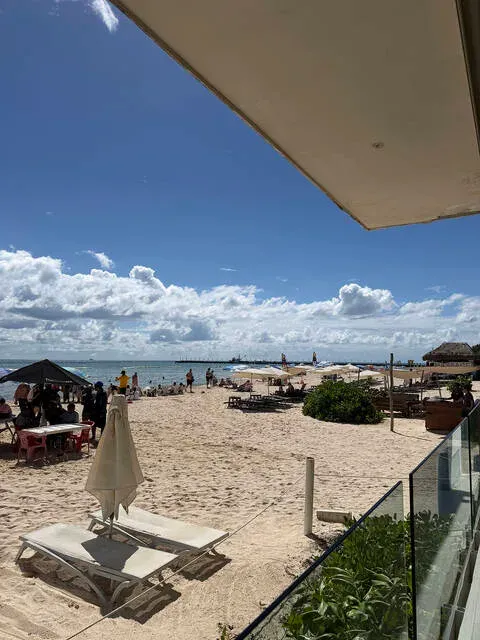
Cancun, Playa del Carmen and Tulum remain major draws for US vacationers, but their location in Quintana Roo puts them within a state where US guidance flags violent crime and kidnapping. Mexico's overall advisory is Level 2, "exercise increased caution," with some states assigned Level 3 or Level 4. Most visits to its Caribbean beach resorts are trouble-free.
Canadian and British guidance also identifies robbery, assault and late-night incidents as concerns in tourist areas, including downtown Cancun and parts of Playa del Carmen and Tulum. Violence involving criminal groups is often targeted, according to the advisories, but bystanders can still be caught in it.
Security alerts issued by the US Mission in Mexico in early 2026 described large-scale operations across several states, including Quintana Roo. US government personnel in the region were temporarily directed to shelter in place. Those conditions subsequently eased.
For visitors, official recommendations include choosing well-reviewed lodging, booking transfers ahead of time or using registered taxis, and limiting travel outside resort areas at night. Travelers are also encouraged to monitor local news and government alerts and enroll in notification systems for security updates.
The warnings come as Mexico continues to record tourism growth. An October 19, 2026, analysis by Nomad Lawyer, citing Mexico's tourism secretariat, SECTUR, put international tourist arrivals for January through August at 32.68 million, up 3.9% from a year earlier.
Jamaica: crime warnings alongside hurricane recovery
The State Department's June 2026 advisory kept Jamaica at Level 3, "reconsider travel," citing crime and infrastructure concerns in specific areas. It identifies particularly serious security problems in some neighborhoods around Kingston, Montego Bay and other urban centers, and says homicide and armed robbery rates substantially exceed those on many other Caribbean islands.
Conditions within major resorts can differ from those in surrounding communities. Jamaican tourism officials emphasize the controlled environments of resort properties, while the national tourism board says the principal international airports and main resort corridors are operating normally. Montego Bay, Ocho Rios and Negril remain popular beach destinations.
Hurricane recovery is a separate consideration. British guidance updated in October 2026 describes continuing problems in some regions hit by Hurricane Melissa in 2025, including limited healthcare access and public health risks from standing water and disrupted sanitation. Visitors should check conditions in the parishes they intend to visit, including any curfews or states of emergency, and use routes and excursions vetted by reputable operators.
Tourism figures reflect a sharp decline. Nomad Lawyer's October 19 analysis reported 917,397 stopover arrivals from January through May 2026, compared with 1,213,228 a year earlier, a 24.4% drop. Total visitor arrivals through August 31 were about 2.34 million, down 17%, while gross tourism revenue fell approximately 18% to US$2.5 billion.
The analysis attributed the downturn to reduced air service after Hurricane Melissa, not weaker demand. Airline seat capacity fell 22%, while flights that continued operating maintained passenger load factors near 85%.
The Bahamas: local crime patterns and watercraft warnings
The Bahamas remains at Level 2, with US guidance drawing particular attention to Nassau on New Providence and Freeport on Grand Bahama. The State Department renewed the advisory on July 28, 2026, without changing its level or risk indicators.
That renewal added warnings about poorly regulated boating. US government employees are prohibited from renting jet skis or personal watercraft from independent operators on New Providence and Paradise Islands. A June 2026 US Embassy alert cited seven sexual assaults on US women by jet-ski operators since 2024, as well as six Americans hospitalized following jet-ski accidents since August 2024.
Police statistics show that national crime totals and individual crime categories have moved in different directions. Royal Bahamas Police Force figures reported by Newsweek in July 2026 put major crime in 2025 at 2,409 cases, down 15% from 2,825 in 2024. Homicides declined 31%, from 120 to 83, and armed robberies dropped 39%, from 265 to 162. Attempted murders, however, increased 23%, from 31 to 38.
For January through June 2026, police figures reported by The Rio Times in September showed a further 6% decline in major crime, to 1,153 cases. Murders fell from 44 to 38 compared with the same period a year earlier. Armed robberies rose 25%, from 76 to 95, with most occurring between 8 p.m. and midnight. Domestic-related reports increased 125%, from 367 to 825.
The distribution of violence also varies by island. According to police data cited by The Rio Times, New Providence accounted for 76 of the country's 83 murders in 2025, roughly 26 killings per 100,000 residents. The Family Islands recorded four murders and Grand Bahama three, with rates of about seven per 100,000.
Government guidance advises particular care in parts of Nassau after dark, use of licensed taxis and avoiding conspicuous displays of jewelry or electronics. It also stresses that risks differ between neighborhoods and islands. Despite the safety concerns, stopover arrivals through July rose 4.3% to about 1.31 million, according to Nomad Lawyer's October analysis, contrasting with Jamaica's decline.
Regional tourism continues to grow unevenly
The country-level figures sit within a Caribbean market where cruise traffic is growing faster than overnight tourism. Caribbean Tourism Organization data presented at its October 2026 conference, reported by the Jamaica Gleaner, showed first-half stayover arrivals rising 1.9% to about 18.9 million. Cruise passenger visits increased 11% to a record 21.7 million.
The United States remained the region's largest source market, providing 48.4% of arrivals, or about 9.18 million visitors. Growth from that market was 1.6%.
Planning around local conditions
For winter 2026 and spring 2027 trips, the advisories call for decisions based on the specific state, parish, island and neighborhood on an itinerary, not just the national rating. Official maps identify localized "do not travel" and "reconsider travel" areas, while embassy alerts can flag security changes on short notice.
Common recommendations include using established accommodations, arranging airport transfers in advance, keeping copies of important documents and maintaining a low profile in nightlife areas. Travelers should continue checking trusted advisory channels during their stay.
Weather planning also matters in The Bahamas during the June-to-November hurricane season. Guidance encourages visitors to follow forecasts, confirm flexible booking terms and check that travel insurance covers both crime-related incidents and weather-related delays.