Routes and restrictions for drivers
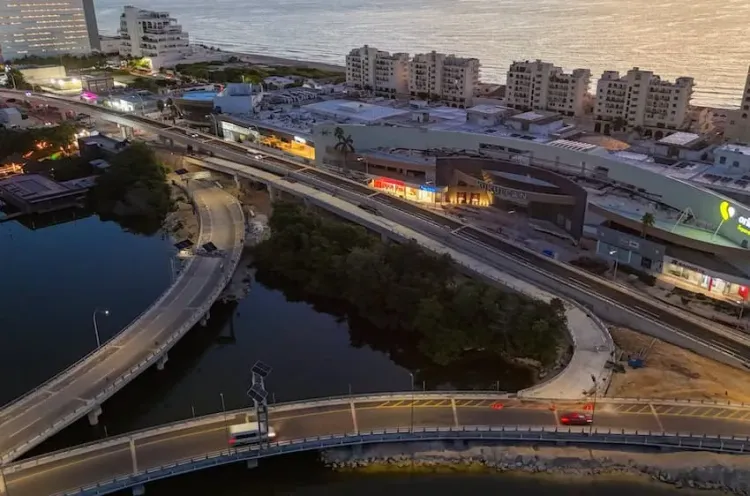
Quintana Roo Governor Mara Lezama Espinosa inaugurated the elevated section at 6 a.m. on Sunday, November 1. The state government's announcement authorizes airport-bound traffic from Boulevard Kukulcán, but not travel in the opposite direction.
The published traffic instructions direct drivers heading from the Hotel Zone to downtown Cancún to take the connection toward the Nichupté Bridge. Those traveling from the bridge to Cancún International Airport should follow Boulevard Kukulcán toward the airport.
The Kukulcán U-turn next to Hospital La Joya remains unavailable to general traffic. Local access to the neighboring shopping plaza is still allowed.
The arrangements affect airport transfers, rental-car trips and other journeys between hotels and the city. With construction continuing, authorities advise motorists to follow posted signs, drive cautiously and leave enough time to pass through the area.
An interchange, not a separate airport highway
Mexico's Ministry of Infrastructure, Communications and Transportation (SICT) is building the Distribuidor Vial Kukulcán as part of a federal project connecting the Hotel Zone, the Nichupté Bridge and the airport. Its role is to manage traffic entering and leaving that corridor, rather than provide a separate highway running all the way to the airport.
A state government update puts the overall road scheme at approximately 1.92 kilometers, with about 770 meters of elevated structures as well as connecting streets. May 2026 reports citing SICT described the interchange's 770-meter structure as a direct link between the bridge and the Hotel Zone at Punta Nizuc. Those reports put the allocated investment at about 484 million to 489 million pesos.
How the Nichupté Bridge fits into the network
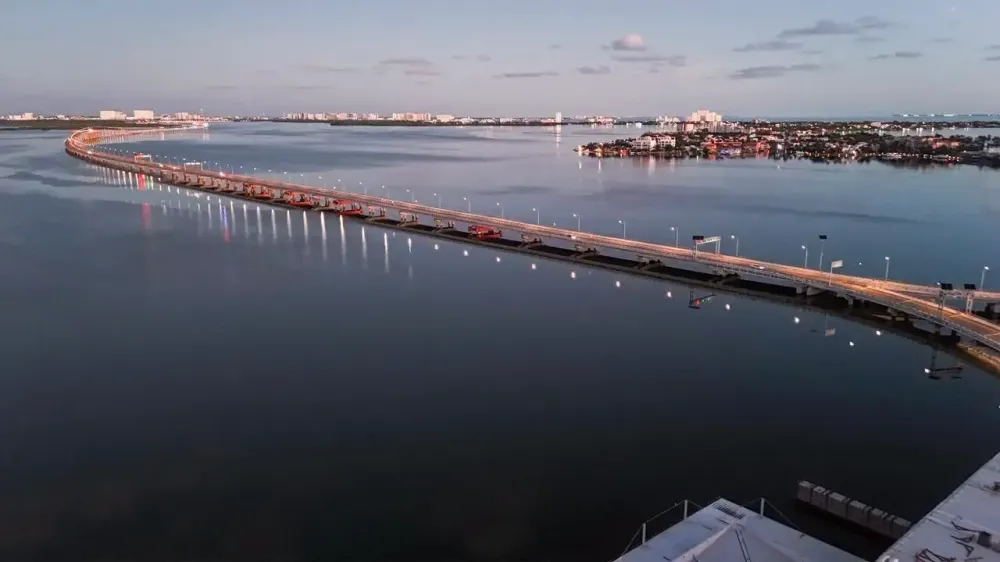
The interchange complements the Nichupté Bridge, which began carrying traffic in May 2026 after its inauguration by the Government of Mexico on May 2. The bridge provides another connection between urban Cancún and the Hotel Zone.
According to SICT, the bridge measures 11.2 kilometers, including an 8.8-kilometer main span across the Nichupté lagoon system. Construction cost 10,319 million pesos, with 3,839 million pesos spent during the current federal administration.
SICT says the bridge reduced trips between Cancún's urban area, the airport and the Hotel Zone from as long as about an hour to roughly 10 minutes. The ministry estimates average daily traffic at 12,000 to 20,000 vehicles, or more than 4 million annually.
The bridge was also designed to offer a faster evacuation route during hurricanes and other natural phenomena, according to SICT. Environmental work associated with construction included rehabilitating 306 hectares of mangrove and opening 40 kilometers of channels.
Remaining work and opening dates
The interchange has missed its original October 2026 completion target. El Congresista, citing SICT, reports that full completion is now envisaged for December 2026.
Separately, the state government expects to open the opposite direction in the coming weeks, but has not confirmed a date for that section. Until then, the published one-way traffic arrangements remain in effect.