What the samples showed
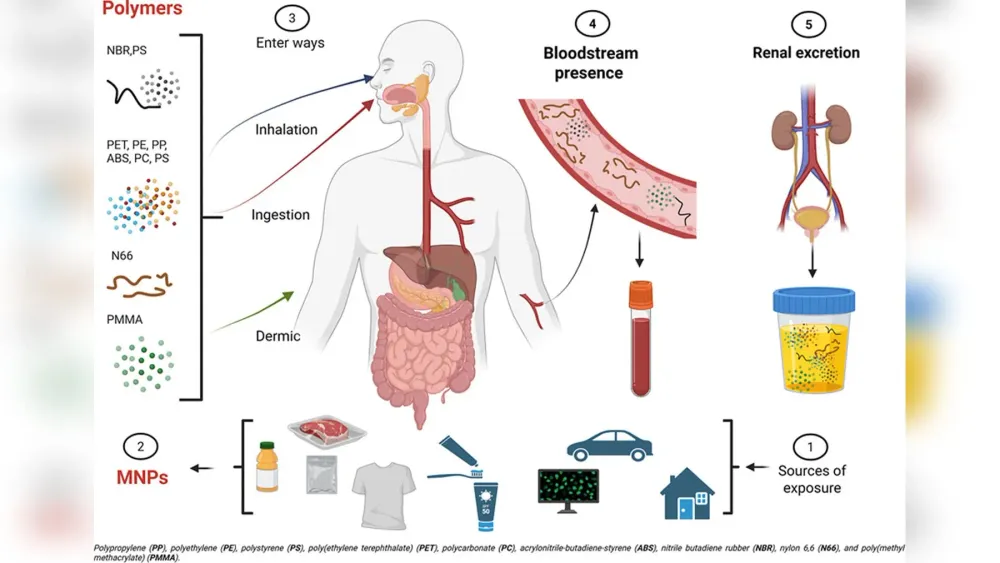
The 98-person study analyzed 78 blood samples and 91 urine samples; 71 volunteers provided both. All participants had a detectable polymer in at least one fluid, but not every individual sample tested positive. The results were published in Environmental Pollution.
Laura Arreola Mendoza of CIIEMAD, IPN's environmental research center, led the project, which examined 10 types of plastic polymers. Working with the Spanish National Research Council (CSIC) in Barcelona gave the researchers access to specialized equipment for analyzing the samples.
The findings differed between the two fluids. IPN reported that fibers accounted for more than 70% of the particles identified in blood, while urine showed a more balanced distribution of fibers and fragments.
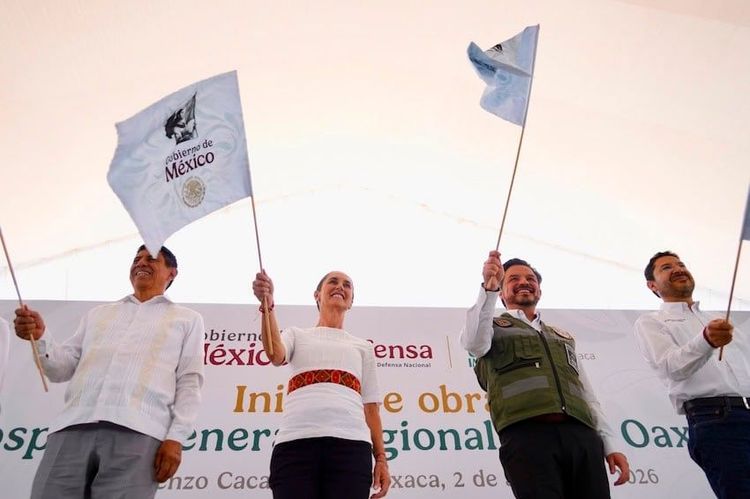
In its September 20, 2026, announcement, IPN described the project as the first human biomonitoring study of its kind to identify and analyze nano- and microplastics in blood and urine. The institute said the work responds to a strategy by Mexican President Claudia Sheinbaum and Public Education Secretary Mario Delgado Carrillo to generate knowledge through public institutions that can help combat potential health harms.
Nylon 66 and the limits of a snapshot
The greater prominence of nylon 66 in blood, compared with urine, prompted the researchers to consider whether it might be retained differently from other plastics. IPN emphasized that this remains a hypothesis requiring further investigation.
The study cannot track the materials' movement through the body over time. Its results do not reveal how long a particle has been circulating or when it might be excreted. Nor does detecting plastic establish that it made a participant ill.
The authors nevertheless see potential for urine as a way to monitor environmental exposure without collecting blood through a needle. Such monitoring would measure exposure, not diagnose disease.
The sample also represents only one community. It cannot establish exposure levels across Mexico or in other populations.
Earlier research provides context
Detection of plastics in human blood predates the Oaxaca project. A 2026 narrative review, Microplastics Across the Human Body, published in the journal Microplastics by MDPI, identifies a 2022 study by Leslie and colleagues in the Netherlands as the first report.
That study used pyrolysis-gas chromatography/mass spectrometry and detected PET, PE, PS, PP and PMMA in 17 of 22 participants, or 77%, with particle sizes of at least 700 nm. Later blood studies in Korea and the United Kingdom reported detection in 32 of 36 samples, or 88.9%, and 18 of 20 samples, or 90%, respectively. Polystyrene, polypropylene and polyethylene predominated in those later studies.
The review also documents findings in urine, stool, semen, breast milk, amniotic fluid, ocular fluids and lavage fluids. Reported tissue and organ detections include the lungs, placenta, heart, kidneys, liver, vascular tissues and reproductive organs. Across the research reviewed, polyethylene, polypropylene, PET, polystyrene and PVC were among the polymers identified most frequently.
Sources of exposure remain difficult to trace
Microplastics generally refers to plastic pieces under 5 millimeters, while nanoplastics are typically smaller than one micron. The U.S. Food and Drug Administration notes that these definitions are not yet standardized. Larger plastic objects can produce such particles as they weather and break down, and people can encounter them in air and food.
The Oaxaca samples also contained the synthetic rubber NBR and polystyrene. IPN raised questions about possible tire-related sources, but a polymer's identity alone cannot link it to a specific tire, package or household item. Establishing the path from an environmental source to a person's sample requires additional evidence.
The wider scale of plastic production provides context for exposure research. The 2026 review estimates that the world produced 430.9 million metric tons of plastic in 2024, with China contributing the largest share, followed by other Asian countries and North America.
"If people knew that you throw it away today and breathe it in or ingest it tomorrow, things would be different," Arreola Mendoza said in IPN's statement, translated from Spanish, connecting discarded plastic with potential human exposure.
Health effects require more evidence
Arreola Mendoza also raised the possibility that plastic particles transport chemical or biological contaminants. That possibility does not establish that particles in the Corralero volunteers carried cancer-causing metals or caused any particular health effect.
The FDA says substantial gaps remain in scientists' understanding of the potential health effects of microplastics and nanoplastics detected in human samples. IPN says its researchers are continuing to process information and investigate how these materials are distributed within the body.