
Vehicle stopped the following morning
The first agent reported the laser at 11:35 p.m. on Oct. 19. A supervisor responding to the report was also targeted. Border Patrol agents then identified an associated vehicle and shared information with Mexican authorities to help locate it.
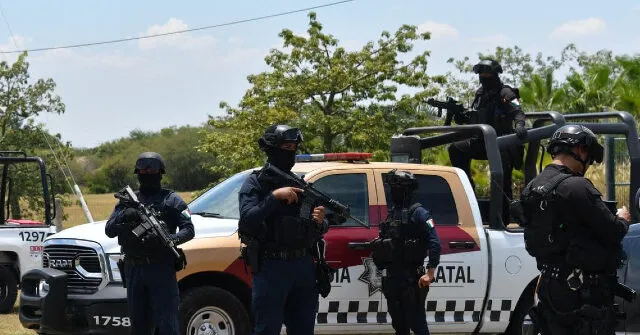
At 6:36 a.m. on Oct. 20, Tijuana Police Department officers stopped the vehicle. After determining that it was stolen, officers detained multiple occupants and recovered a laser device. Mexican authorities said those detained would be brought before a civic judge for review under Mexican law.
San Diego Sector Chief Patrol Agent Justin De La Torre praised the Tijuana officers' response. "When someone endangers a law enforcement officer at the border, the international boundary should not be a shield from accountability," he said. He described protecting officers as a shared responsibility and said the cooperation also supported efforts to prevent dangerous border crossings.
Border Patrol warned that lasers can seriously impair officers' vision and pose safety risks. The agency said the case demonstrated the need for prompt exchanges of information and joint enforcement when threats come from either side of the border.
Earlier cross-border laser incidents
Cooperation on laser incidents predates the San Diego case. In a Nov. 3, 2020, report, Homeland Security Today described how Border Patrol's Foreign Operations Branch works with the Mexican government to identify people pointing lasers from Mexico. One operation involving U.S. and Mexican authorities led to the arrests in Ciudad Acuña of two people suspected of directing lasers at aircraft.
A CBP supervisory air interdiction agent told the publication that laser targeting from Mexico typically happens while crews track groups that have entered the United States illegally. In his assessment, the likely aim is to distract agents and disrupt enforcement. That assessment concerned aircraft crews; Border Patrol did not identify a motive for the Oct. 19 incident.
A separate case in February 2025 involved a Department of Homeland Security AS-350 helicopter patrolling about 13 miles west of McAllen International Airport in Texas. A laser from a vehicle on the Mexican riverbank targeted the helicopter three times. FOX 4 Dallas-Fort Worth, citing CBP, reported that this was the sixth time in four months that laser targeting had forced Air Interdiction Agents to take evasive action.
Aircraft laser reports and penalties
National aviation figures show the broader scale of laser targeting. In a March 26, 2025, announcement, the Federal Aviation Administration said pilots had reported 12,840 laser strikes in 2024, down 3 percent from 13,304 in 2023. California had the highest state total at 1,489, followed by Texas at 1,463.
Knowingly directing a laser pointer at an aircraft or its flight path is a felony under 18 U.S.C. § 39A, with penalties of up to five years in prison and a $250,000 fine. Separate FAA civil penalties can reach $11,000 for one violation and $30,800 for multiple laser incidents. Those provisions apply to aircraft; the Border Patrol account of the Oct. 19 incident did not report any aircraft involvement.
Continued cooperation and reporting
Border Patrol said it would continue working with Mexican law enforcement to protect personnel, support public safety and discourage unlawful border crossings that can expose people to life-threatening conditions. Suspicious activity can be reported to the San Diego Sector at 619-498-9900.