Agreement ends disruptions in 19 states
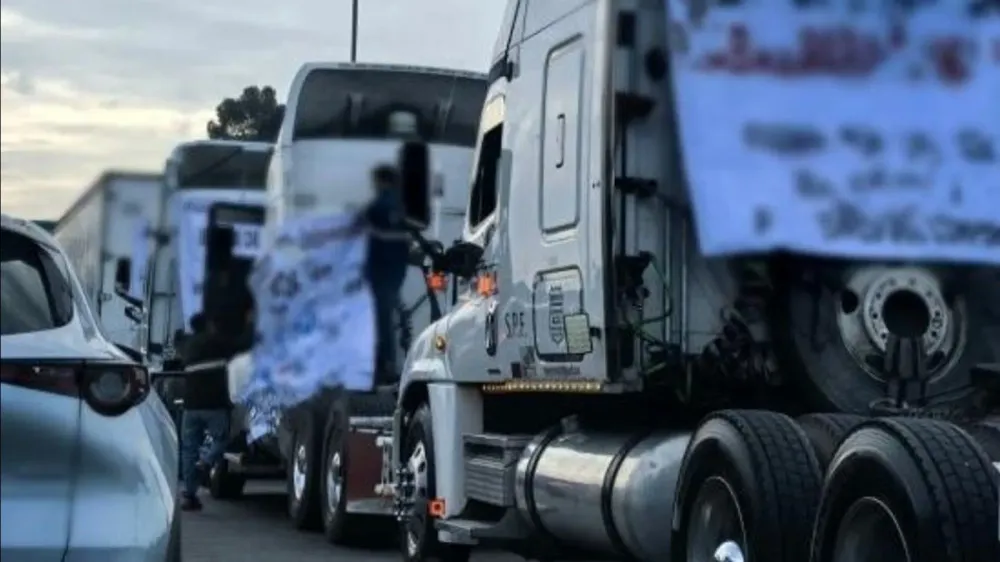
The Interior Ministry, known as Segob, recorded 38 protest locations across 19 states on Monday morning. The disruptions included highway closures at Tlaxco in Tlaxcala and at kilometer 17 outside Nuevo Laredo, Mexico's main freight crossing into the United States. Protesters in Veracruz also cut off the highway to Cardel and access to the port.
By Tuesday, Segob said the National Chamber of Freight Transport (CANACAR) and its allies had agreed to "permanently withdraw the blockades and suspend the demonstrations." In return, federal agencies would hold four working groups with the organizations.
The agreement's minutes also require the participating organizations to "avoid new disruptions to the public and to free transit." The World Socialist Web Site reported no indication that drivers had been consulted before the deal.
Security demands and a dispute over tax credits
CANACAR, an employers' chamber rather than a workers' organization, led the coalition alongside HAMOTAC, FEMATRAC and INDECO. Mexican law defines business chambers as "organs of consultation and collaboration of the State." FreightWaves reported in July that CANACAR represents roughly 250,000 transportation companies; the chamber says trucking carries about 80% of Mexico's domestic and export freight.
Alongside highway security, the coalition raised tax demands. The 2027 revenue law reduces the annual revenue ceiling for companies eligible to offset up to half their toll expenses against income tax, from 300 million to 250 million pesos. Before the stoppage, CANACAR President Augusto Ramos Melo told President Claudia Sheinbaum: "We support Plan México… We are your allies."
Sheinbaum characterized the protest as a tax dispute involving "a very small sector." On October 27, she said the change covered 170 of the 2,580 firms receiving the benefit. "What there cannot be is a defense of privileges," she said, questioning why protesters "had to stop yesterday and close the roads if there was dialogue." The WSWS noted that she did not address drivers who had been killed or disappeared.
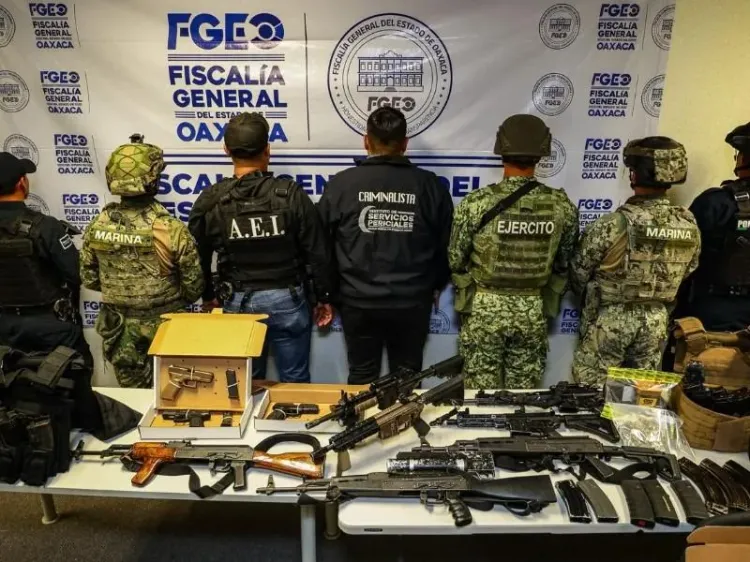
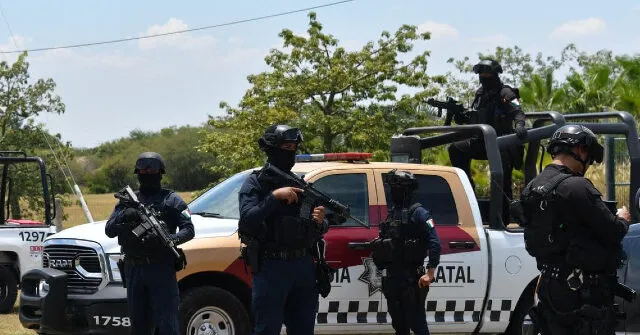
The planned Finance Ministry talks will cover tax incentives and financing for truck replacement. The Social Security Institute (IMSS) and Labor Ministry will address drivers' inclusion in social security and how a shorter workweek would apply to trucking. Security discussions will involve the Attorney General's office (FGR), the National Guard and the Security Ministry led by Omar García Harfuch—the same forces drivers have accused of extortion.
A killing in Puebla brings grievances to the fore
The immediate catalyst was the October 21 killing of Estanislao Hernández Lozano, a delegate of the Mexican Alliance of Transport Organizations (AMOTAC). Gunmen killed him at night in Puebla and stole his pickup. Andy Rossini Martínez, AMOTAC's representative in the state, said: "In one month, 18 cargo trucks have been assaulted." Puebla prosecutors registered 882 robberies of transport workers between January and September, including 832 involving violence.
Recovering a stolen truck can bring another demand for money. Juan Carlos Romero, HAMOTAC's coordinator in Tehuacán, told Municipios Puebla that criminals seek payments of up to 200,000 pesos ($10,600) to return vehicles.
Drivers' complaints extend to officials. In August, truckers from Lázaro Cárdenas demonstrated at the FGR's Morelia offices over extortion at checkpoints and towing bills reaching 120,000 pesos. During the October stoppage, a driver identified as Andrés wrote on Facebook that truckers wanted an end to highway insecurity and to robberies and extortion by "the rats in uniform and badge."
Theft figures fall, but attacks remain a concern
CANACAR has reported a decline in cargo robberies that resulted in investigation files. El Economista reported on October 6 that Ramos Melo put the January-August 2026 total at 4,950, down 20.5% from 6,096 in the same period of 2025. The chamber separately reported a full-year 2025 total of 6,001 incidents and estimated industry losses of about 7,000 million pesos. It said the share of robberies involving violence fell from 41% in 2025 to 24% in 2026.
The chamber has also warned about attacks on drivers. According to a July 5 FreightWaves report, CANACAR said at least 14 truckers had been killed in highway attacks in 2026 as of early July. It described robbers increasingly firing on drivers instead of waiting for them to stop voluntarily.
Overhaul's Mexico Q2 2026 Cargo Theft Report presented another assessment of violence. As reported by FreightWaves on August 23, the supply-chain risk firm found violence in 76% of the incidents it recorded. The Center region accounted for 46% of thefts and the West for 31%, a combined 77%.
The State of Mexico accounted for 18% of incidents in Overhaul's report, Puebla for 17.9% and Guanajuato for 10.8%—nearly half of the total together. Ten states accounted for 86.3% of incidents. Food and beverages were the most frequently targeted shipments, at 30%.
Federal officials have offered a separate forecast. National Guard commander Guillermo Briseño Lobera projected a 37% decline in cargo thefts involving trucking companies in 2026 compared with the 6,263 incidents reported in 2025, FreightWaves reported on August 23. He attributed the expected reduction to the Balam highway security strategy, which operates in 12 states and, he said, helped reduce incidents by 37.19% between 2024 and 2025.
CANACAR has also called for secure places for drivers to stop. La Razón reported on June 18 that Ramos Melo said half of cargo robberies occur while operators are parked to eat, use the restroom or sleep, citing that figure in support of secure truck parking areas.
Owner-operators, vacancies and working conditions
Owner-operators make up roughly 80% of Mexico's trucking sector, according to a Kearney and CSCMP study reported by Revista TyT on October 26. The study estimated that 70,000 to 90,000 operator positions were vacant, or about 14% of posts, and found that 37% of vehicles in Mexico were more than 20 years old.
A bill introduced in the Senate in August would limit drivers' shifts to 14 hours a day. The WSWS described that proposed ceiling as an indication of the hours drivers currently work.
The social security talks also take place against widespread informal employment. INEGI reported that 32.6 million people, or 54.3% of Mexico's workforce, worked informally in September, without contracts, health care or pensions.
Earlier blockades and unfulfilled promises
Truckers and farmers had already secured federal security pledges after a four-day blockade in November 2025. Segob promised surveillance cameras and a special prosecutor's office for highway crimes. In August, ANTAC said delivery had come only "drop by drop" and reported that 20 drivers had disappeared in January alone. Authorities also used tear gas against a trucker and farmer blockade on Tlaxcala's Arco Norte highway on April 7.
A separate dispute closed the Mexicali-Calexico crossing for four days in early September. More than 300 drivers, organizing independently of CANACAR and other chambers, protested the United States' revocation of visas for some 20,000 Mexican drivers. Sheinbaum called visa withdrawal "a sovereign decision of a State" and said "we cannot intervene." One meeting involving officials, business organizations and a small group of driver representatives brought that blockade to an end.
Across the border, hundreds and possibly thousands of US owner-operators parked their trucks on October 1 in a social-media-organized protest against diesel prices driven higher by the US war on Iran.
The WSWS calls for independent driver committees
The WSWS argues that the federal talks leave drivers' conditions in the hands of ministries and transport associations dominated by larger fleet owners. In its assessment, those associations prioritize tax credits, truck subsidies and flexibility over working hours rather than drivers' needs.
The publication calls for rank-and-file committees independent of business chambers, unions and Morena. It also opposes expanding the police, National Guard or military under the banner of highway security.